Put AI to work without putting your organization at risk.
I help schools and advisory firms adopt AI that saves real time and holds up to an audit, an accreditor or an exam. Fractional AI leadership, without the executive salary.
Former Merrill Lynch & JPMorgan wealth manager • NYPD Medal of Valor • U.S. Army • School Executive • Author
A short, free call. You leave with at least one thing you can fix this week.
Your staff are already using AI.
Most organizations don't have a policy for it, don't know which tools touch sensitive data, and can't show a regulator how any of it is supervised. Meanwhile, the time savings everyone promised haven't shown up.
You don't need more tools.
You need judgment about how to use them.
Know what to automate.
Know what to leave alone.
Know what to write down.
Here is what most AI vendors won't tell you: the question isn't whether a tool works. It's whether you can defend how you used it to an accreditor, an auditor or an examiner. That takes someone who has sat in the seat that gets examined.
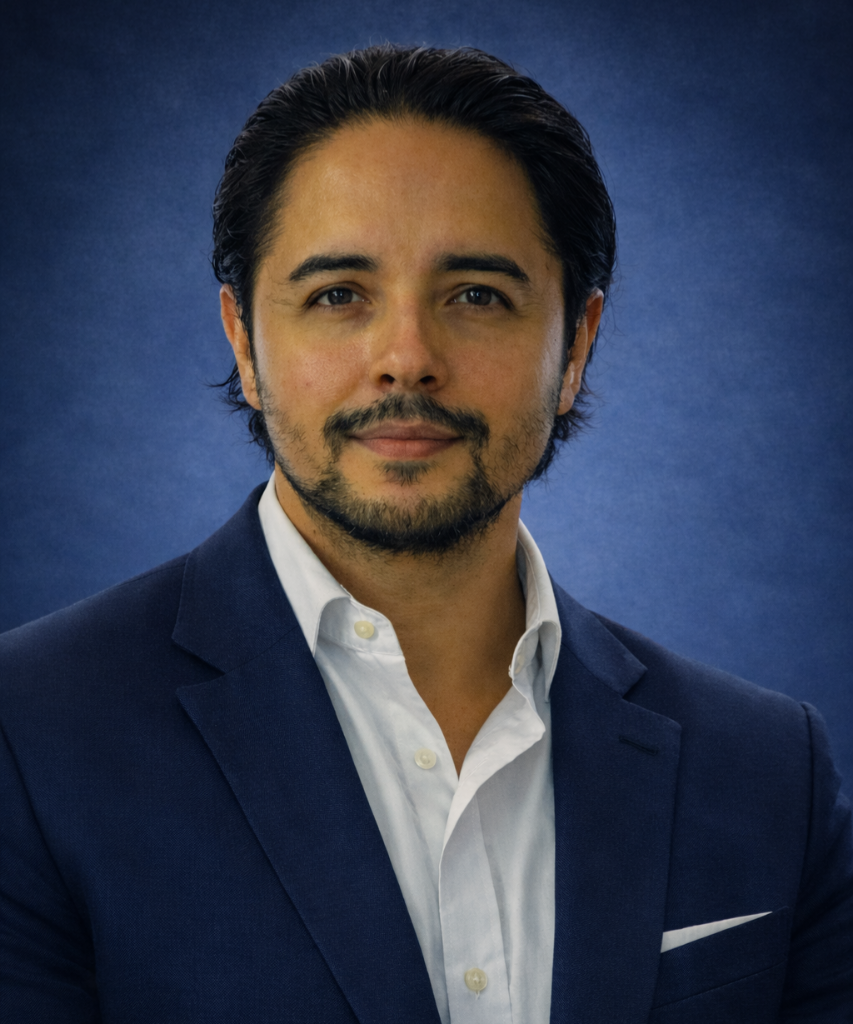
About Michael A. Aponte
I've spent my career in places where a bad decision has consequences. That is what I bring to your AI decisions: not just what the tools can do, but what will hold up when someone checks.
FINANCE
Wealth manager at Merrill Lynch and JPMorgan, working under constant supervision and compliance review. Previously held FINRA Series 7, 63 and 65 registrations and life and health insurance licenses.
"If you can't document it, you can't defend it."
ARMY & LAW ENFORCEMENT
U.S. Army. NYPD Medal of Valor. Split-second decisions made under the highest scrutiny.
"Structure beats instinct under adrenaline."
EXECUTIVE LEADERSHIP
Leading a public charter school through accreditation, state accountability and board governance, on a budget with no room for a big back office.
"Lean is a design choice, not a limitation."
The school is where AI became real for me. With no staff to spare, I built AI into how we run: compliance, board reporting, data analysis and staff communication. It worked, and I'll present how we did it at Cognia's 2027 Southeast IMPACT Conference. AI can produce an answer in seconds. Knowing whether to trust it, and what to do next, is still a human job.
Also:
How it works
Four steps, in order. Most organizations start at step one; you only go as far as you need.
Assess
Find where AI is already in use, where it saves real time, and where it creates risk.
Govern
Put a policy, guardrails and trained staff in place before you scale.
Implement
Roll out the workflows and tools that earn their place, and measure the results.
Lead
Someone owns it: fractional or interim AI leadership until your team can run it.
AI does the work faster. You stay accountable for the decision, so every step is documented.
The Pre-Decision Checklist
10 questions I use to stress-test consequential decisions — the same structure behind every paid engagement, distilled to one page.
Enter your email and the checklist appears right here — instantly. Occasional decision-making tools by email after that. Unsubscribe anytime.
Engagements
Start small. Go as far as you need. The real cost isn't the fee; it's getting AI wrong: a data incident, an exam finding, a board that loses confidence. Prices are fixed for the scope shown. Larger organizations receive a custom quote.
Built for schools, education nonprofits and advisory firms. Limited availability.
AI Readiness Assessment
Know exactly where you stand.
Two weeks, fixed scope. One organization, up to 50 staff.
AI Governance & Training
Answer the board, or the examiner, with confidence.
Three weeks, board ready. One policy set and one training session, up to 50 staff.
Workflow Discovery Sprint
Find the hours hiding in your operation.
Two days of observation, one week to report.
Fractional AI Leadership
Executive AI leadership without the executive salary.
Three-month minimum. Two partner organizations at a time.
Interim AI Lead
An acting head of AI for the season you need one.
Four-month minimum. One interim client at a time.
High-Stakes Decision Audit
One decision. Fully stress-tested.
For a single consequential call, AI-related or not.
Most organizations begin with the AI Readiness Assessment.
Aponte Strategic Advisory provides operations and technology advisory services. It does not provide investment, legal or compliance advice.
Done-for-you Builds
Work through it with me in one session, or hand it off and I build it for you. Either way, you end up with something that works, connected to the tools you already use.
Operational platforms built and running today in a Florida charter school and multiple consumer products, including staff command centers, an AI-powered finance platform, and a gamified learning app.
AI Working Session
Bring a problem. Leave with something working.
Command Center Build
A custom internal app for your team, in weeks.
Full Product Build
From spec to launch.
Maintenance Plan
So it keeps working after launch.
Every build starts with a diagnosis. Not sure what you need? Start with the AI Readiness Assessment.
Client Testimonials
Trusted by leaders in high-stakes environments
"Working with Michael Aponte of Aponte Strategic Advisory was a defining moment for (omitted due to NDA). As we prepared for national expansion, Michael delivered a comprehensive Decision Audit that mapped our organization's full strategic position: our federally registered intellectual property, our century-old legacy rooted in (omitted) tradition, and the documented market validation of our frameworks. He translated all of it into a clear, four-track growth strategy covering licensing, visibility, accountability, and market expansion. What sets Michael apart is his precision. Every recommendation was anchored in evidence, structured for execution, and focused on one question: what builds the greatest long-term advantage? He does not just advise. He builds a roadmap you can act on immediately. I recommend him without hesitation to any founder or executive navigating a high-stakes decision. — S.C, M.Ed., Founder & Executive Architect"
"We were in a difficult position. As we expanded our CTE implementation across districts, we began noticing patterns that made us uncomfortable — blurred boundaries, intellectual property exposure, and client behavior that felt increasingly risky. Michael didn't overreact, and he didn't dramatize the situation. He helped us slow down, think clearly, and put structure around decisions we had been handling emotionally. Within weeks, we had clearer guardrails, stronger documentation, and a more disciplined process for protecting our work. What I appreciated most was the stability he brought. He wasn't trying to impress us. He was trying to reduce unnecessary risk. That shift alone changed how we operated."
"We engaged Michael during a period of operational instability where decision fatigue was setting in and internal alignment was weakening. His value was not motivational. It was structural. He introduced a disciplined decision framework that forced us to separate signal from noise, clarify sequencing, and anticipate second-order consequences before acting. The result was measurable stability over the next 90 days. Communication improved. Reactive decisions decreased. Stakeholder tension reduced. I'm grateful for the clarity he helped restore. It wasn't flashy — it was effective."
Frequently Asked Questions
Schedule a Confidential Conversation
If it's not a fit, I'll tell you quickly.